How to Win the Credit Card Game
The credit card setup I use to earn free flights and hotel stays without carrying a balance. Which cards to get, in which order.
Key Takeaways
- Get Chase cards first. Their 5/24 rule locks you out if you open 5 cards from any bank in 24 months - sequence matters.
- Never carry a balance. Interest wipes out every reward. Treat cards exactly like a debit card you get points on.
- The Chase Sapphire Preferred is the right first travel card for most people - strong bonus, flexible points, reasonable fee.
- Points are only valuable if you actually redeem them. The best setup is one you'll use, not the theoretically optimal one.
Which setup fits you?
The right card depends on where you are right now. Pick the profile that matches, then follow it down.
| Situation | Key Feature | Recommended Card |
|---|---|---|
| Build your credit | No credit score required | Discover it® Secured |
| Earn cash back (The Saver) | Flat rate on everything | Citi Double Cash® |
| Travel points (The Explorer) | Transferable points | Chase Sapphire Preferred® |
| Premium cards | Lounge access & credits | Chase Sapphire Reserve® |
Build your credit
You need a solid credit score to get the best cards. If you’re starting from scratch, focus on cards that are easy to get and show a history of on-time payments.
Discover it® Secured
The Discover it® Secured card is a reliable entry point. It requires a refundable deposit that defines the initial credit limit, while offering a clear progression path to an unsecured account.

Keep the account open
When you upgrade to a regular card, they will return your deposit. Keep the account open to build your credit history for free.
The Builder's Playbook
Earn cash back
If you want simple rewards without tracking points or paying annual fees, a flat-rate cash back card is the best setup.
Citi Double Cash®
The Citi Double Cash® gives you a flat 2% back on everything - 1% when you buy and 1% when you pay. There is no annual fee and no categories to track.

No annual fee
Since this card is free, you can keep it forever to help your credit score at no cost.
If you bank with BofA: Premium Rewards®
If you keep assets at Merrill or Bank of America, their loyalty program boosts your cashback rate. This got worse in 2026: the program was renamed BofA Rewards on May 27, and the 75% boost that used to arrive at $100,000 now requires $1 million. At $100k to $1M you get 50%, so a flat 2% card earns 2.25% rather than the old 2.62%.
If you’re already a Platinum Honors member, none of this hits you yet. Existing members keep the 75% boost until three months after their first account anniversary following November 2026 - so for most people the old 2.62% holds through some point in 2027. Worth knowing before you move assets around on account of a change that hasn’t reached you.
One caveat before you count on those credits: a credit for something you wouldn’t otherwise buy isn’t a discount, it’s a coupon. Only count the ones you’d have spent that money on anyway - the airline incidental credit is worth it if you actually fly, not because it exists.

Online Shopping Specialist: Custom Cash®
Not a primary card, but a strong pick for online shopping. You choose one category each billing cycle to earn 3% cash back - online shopping is the easiest set-and-forget choice.

Travel points
Transferable points are the key to free travel. By using the Chase ecosystem, you can move points to partners like Hyatt and United for much higher value than cash back.
The Chase Foundation
Use a two-card strategy to earn points on all your spending while keeping the ability to transfer them to travel partners.


Apply before hitting Chase 5/24
Chase denies you if you’ve opened 5+ cards in the last 24 months. Get these cards first - before any Amex, Citi, or other bank cards fill your slots.
Premium Alternative: Chase Sapphire Reserve®
If you travel frequently (5+ trips/year), the $795 annual fee looks worse than it is. Between the automatic $300 travel credit and up to $500 in The Edit hotel credits, the math can still beat the Preferred - but only if you actually use them.

Bilt rewards
This is a specialized setup for high-spenders with large monthly housing costs. It lets you earn points on your rent or mortgage without any fees.
Bilt Palladium
The Bilt Palladium is the premium tier at $495 a year. Strong points yield, and it’s one of the very few cards that lets you put rent or a mortgage on it without a processing fee - the largest expense most people never earn anything on.

Premium cards
These cards are all about the perks: airport lounges, travel insurance, and elite status. Choose based on which airline or hotel you use most.
The Amex Duo
This is the classic high-end setup. It covers your travel and dining with the highest reward rates available.


Option B: The Chase Ecosystem
The Card: Chase Sapphire Reserve® ($795 fee).
A high-end card with an easy-to-use $300 travel credit that applies to anything from flights to parking garages. That brings the effective fee to $495 before you touch the more restrictive credits - up to $500 for The Edit hotel bookings and $300 in dining credits, which can wipe out the rest if you use them.
The Chase Trifecta
The Reserve works best when paired with the Freedom Flex and Freedom Unlimited to earn the most points on every purchase.
Option C: Airline Loyalty
The Card: Delta SkyMiles® Platinum American Express ($350 fee).
Best for frequent Delta flyers who want to earn status faster. The companion certificate alone can easily offset the annual fee.
Maintain Your Status
The MQD head start makes it much easier to reach Silver Medallion status every year without spending thousands extra.

Cards I have dropped
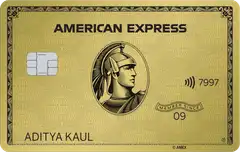
American Express® Gold Card
🏆 Why I used it
It earned 4x points on dining and groceries, which was great for a while.
🛑 Why I closed it
Managing the monthly credits to offset the fee became too much of a chore.
🚪 Status
Closed. I prefer cards that don’t require monthly maintenance to be profitable.

Alaska Airlines Visa Signature®
🏆 Why I used it
It was great for the annual companion certificate and earning airline miles.
🛑 Why I closed it
I changed how often I fly with Alaska, so the companion pass was less useful.
🚪 Status
Replaced by the Bank of America® Premium Rewards® card for better overall cash back.
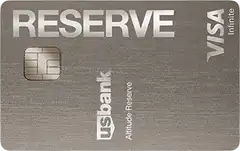
US Bank Altitude® Reserve
🏆 Why I used it
It gave me 4.5% back on all Apple Pay and mobile wallet purchases.
🛑 Why I closed it
They removed the mobile wallet bonus in late 2025, taking away its biggest perk.
🚪 Status
Downgraded to the no-fee Altitude® Connect to keep the account open without paying a fee.
The cards I reach for
This is not a full inventory - it is which card I pull out for which category. Two cards carry almost all of my everyday spending; the travel cards below them exist for different reasons entirely.

1. Dining & Travel
Bank of America Premium Rewards
I use this for dining and travel. Because of my status with BofA, I get a high cash back rate on every purchase.

2. Everything Else
Bilt Palladium (Option 2)
I use this for all other spending. It earns points that I use to pay my mortgage at a very high valuation. Worth noting: I am reevaluating whether the $495 fee still clears for me next renewal - the strategy below holds regardless, and the lower Bilt tiers run the same play for less.
Two travel cards sit behind those: the Chase Sapphire Reserve, my primary travel card for its automatic $300 credit and 1:1 Hyatt transfers, and the Amex Platinum, which I hold purely because its welcome bonus and credits outrun the fee - not because it earns well. Neither is an everyday-spend card, which is why they are not in the grid above. The full comparison is here. I also keep a no-fee US Bank Altitude Connect open, downgraded from the Altitude Reserve, to preserve the account age.
The Golden Rules
1. Never pay interest
If you pay interest, you lose. Always set up autopay to clear your full statement balance every single month. Rewards are only free if you don’t pay to earn them.
2. Plan your sequence
Don’t just apply for cards at random. Most banks have rules about how many cards you can open. Start with Chase first because they have the strictest limits.
Where to start
If you’re not sure which path fits, start with the Chase Sapphire Preferred®. At $95 it’s still the most flexible first travel card - strong bonus, full set of transfer partners, no complexity. The one asterisk: Hyatt transfers from this card now run 4:3 instead of 1:1. If Hyatt is your endgame, look at the Reserve. You can always add more cards once you understand how the points work.
ⓘ Links on this page may earn me a small commission at no cost to you. I only recommend products I actually use. Affiliate policy →
Frequently asked questions
What is the Chase 5/24 rule?
Will applying for a credit card hurt my credit score?
What credit card should I get first?
How do I maximize credit card rewards without paying interest?

Cite this guide: "How to Win the Credit Card Game", jason.guide, updated 2026-08-29. https://jason.guide/guides/credit-cards