Credit Card Packs: Which Points System Fits You
Chase, Amex, Capital One, Citi, Bilt, and Bank of America each run their own points system. Here's what's in each pack, who it's built for, and how to combine them.
Key Takeaways
- A pack is one points currency plus the cards that feed it: an anchor card that unlocks transfers or perks, and cheaper cards that earn on everything else.
- Pick the pack by where you want to redeem (Hyatt and United point to Chase, Delta to Amex, American to Citi or Bilt), then pick the tier by how much of the credits you'll actually use.
- Start with the Chase pack if you're new to points. Chase's 5/24 rule can lock you out later, and no other bank has an equivalent.
- Bilt fits alongside any pack, because it earns on rent or a mortgage and none of the others do.
Most good credit card setups aren’t one card. They’re a pack: one bank’s points currency, a card that unlocks the valuable redemptions, and cheaper cards that earn on everything else. Here’s what each pack looks like, who it’s built for, and why.
How a pack works
Every pack has two jobs, and usually two kinds of card:
- The anchor unlocks what makes the points valuable: transfers to airline and hotel partners, lounges, travel credits. It usually has the annual fee.
- The earners are cheap or free cards that earn more in the categories the anchor misses. Their points pool into the anchor’s account, so they become just as valuable.
That gives you two decisions. First pick the pack, based on where you want to redeem: each bank transfers to a different set of airlines and hotels. Then pick the tier, based on how much of the credits you’ll actually use. A $795 card is worth it only if the credits replace money you’d spend anyway.
Which pack fits you
| Question | Start with | Why |
|---|---|---|
| You're new to points | Chase | Strong partners, a $95 entry card, and it's the pack the 5/24 rule can lock you out of later. |
| Most of your money goes to restaurants and groceries | Amex Gold | 4x at restaurants and U.S. supermarkets, the best rate for that spending. |
| You fly Delta or live near a Centurion Lounge | Amex Platinum | Delta Sky Club visits, Centurion Lounges, and the only major currency that transfers to Delta. |
| You want one card and no categories | Capital One Venture X | 2x on everything, and the credits roughly cover the $395 fee. |
| You fly American Airlines | Citi Strata | One of only two currencies (with Bilt) that transfer to American AAdvantage. |
| You pay rent or a mortgage | Add Bilt | Points on housing with no fee, which none of the other packs offer. It stacks with any of them. |
| You want cash and keep $100k+ at BofA | Bank of America | BofA Rewards adds 50% to 75% to everything these cards earn. |
The Chase pack
Who it’s for: almost everyone getting started with travel points, and anyone who wants Hyatt, United, or Southwest. Why: all three are Chase transfer partners, and Hyatt is consistently one of the best uses of any points. It also has to come first. Chase usually declines you if you’ve opened five or more cards from any bank in the past 24 months, and no other bank has a rule like it. The 5/24 guide covers the details.
| Question | Entry | Premium |
|---|---|---|
| Cards | Sapphire Preferred + Freedom Unlimited | Sapphire Reserve + Freedom Unlimited |
| Annual fees | $95 | $795 |
| Earning | 5x through Chase Travel, 3x dining, 1.5x on everything else with the Freedom | 8x through Chase Travel, 4x flights and hotels booked direct, 3x dining, 1.5x everything else |
| Perks | $100 Chase Travel hotel credit, Global Entry credit | $300 travel credit, Sapphire Lounges and Priority Pass with two guests, up to $500 for The Edit hotels, dining credits |
| Hyatt transfers | 4:3 (100,000 points become 75,000) | 1:1 |
| Worth it if | You travel a few times a year | You travel often enough to use the $300 credit and the lounges |
- Chase Freedom Unlimited®

The earner. No annual fee, at least 1.5x on everything, and its points pool with your Sapphire card.
Review Freedom Unlimited → - Chase Sapphire Reserve®

The premium anchor. On a budget, the Sapphire Preferred does the same job for $95.
Review Sapphire Reserve →
Prefer the entry tier? The Sapphire Preferred’s public offer is currently 100,000 points after $6,000 in purchases in 3 months. Skip this pack if you never travel. Its points are worth the most as transfers, and a 2% cash back card is simpler if you’d only redeem for cash.
The Amex pack
Who it’s for: people who spend heavily at restaurants and grocery stores, and Delta flyers. Why: the Gold earns 4x where most households spend the most, and the Platinum has the broadest lounge access of any card, plus transfers to Delta, which no other major bank offers. Compared with Chase, Amex also adds ANA, Emirates, Qatar, Cathay Pacific, Etihad, Qantas, and Hilton.
| Question | Entry | Premium |
|---|---|---|
| Cards | Gold | Gold + Platinum |
| Annual fees | $325 | $1,220 combined ($325 + $895) |
| Earning | 4x at restaurants (first $50,000 a year) and U.S. supermarkets (first $25,000 a year) | Adds 5x on flights booked with airlines and prepaid Amex Travel hotels |
| Perks | $120 dining credit, $120 Uber Cash, $100 Resy | Adds Centurion Lounges, 10 Delta Sky Club visits a year, $219 CLEAR+, $200 airline fee credit, $200 Uber Cash, $400 Resy, $600 in hotel credits, and more |
| Worth it if | Groceries and dining are your biggest categories | You fly Delta, use lounges, and will actually use most of the monthly credits |
- American Express® Gold

The earner: 4x on food, which is most people's biggest everyday category.
Review Amex Gold → - The Platinum Card®
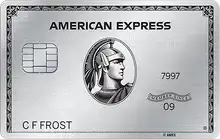
The anchor: lounges, Delta, and credits that cover the fee if you use them.
Review Amex Platinum →
Skip this pack if you don’t want to manage credits. Much of the value arrives as monthly credits at specific merchants, and unused credits are just fees. That’s why I closed my Gold. The Platinum also works on its own if, like me, you hold it for Delta and lounges and let another pack handle everyday spending. The Amex Platinum vs. Sapphire Reserve guide compares the two anchors head to head.
Bilt: the add-on for housing
Who it’s for: anyone who pays rent or a mortgage. Why: it’s one of the few cards that earn points on housing without a transaction fee, and housing is most people’s biggest bill. Unlike the other packs, Bilt doesn’t compete with them; it covers a bill none of them touch. Its points transfer 1:1 to partners including Hyatt, United, and American.
| Question | Entry | Premium |
|---|---|---|
| Card | Bilt Blue | Bilt Palladium |
| Annual fee | $0 | $495 |
| Everyday earning | 1x | 2x |
| Perks | Points on housing | Points on housing, $400 Bilt Travel hotel credit, $200 Bilt Cash, Priority Pass |
| Worth it if | You pay housing and use another pack for everything else | You'd put most of your everyday spending on it and use the hotel credit |
How much you earn on housing depends on your everyday spending and which of Bilt’s two earning options you pick. The Bilt guide runs the numbers. Compare the Bilt cards.
The cash back pack: Bank of America
Who it’s for: people who keep $100,000 or more at Bank of America or Merrill and would rather have cash than points. Why: the BofA Rewards program adds 50% to everything these cards earn at $100,000 in assets and 75% at $1 million, which pushes flat cash back past what most points cards are worth. If you don’t have the assets, this pack isn’t for you; a flat 2% card is simpler.
| Question | Customized Cash Rewards | Premium Rewards |
|---|---|---|
| Annual fee | $0 | $95 |
| Base earning | 3% in a category you choose, 2% grocery and wholesale clubs (first $2,500 a quarter, combined), 1% else | 2x travel and dining, 1.5x everything else |
| With a 50% bonus | 4.5% in your category | 3% dining and travel, 2.25% everything else |
| With a 75% bonus | 5.25% in your category | 3.5% dining and travel, 2.62% everything else |
| Role | Your chosen category (online shopping is the easy one) | Everything else, plus $100 airline incidental credit |
The 75% tier now takes $1 million in assets, though existing members keep it into 2027. Premium Rewards · Customized Cash Rewards
The Capital One pack
I don’t carry this pack. This section is based on Capital One’s published terms as of October 2026, not my own use.
Who it’s for: people who want one card, no categories to track, and a premium card for less. Why: the Venture X earns 2x on everything, and its yearly $300 Capital One Travel credit plus 10,000 anniversary miles are worth about as much as the $395 fee. It’s the cheapest premium card on this page.
| Question | Venture X | Notes |
|---|---|---|
| Annual fee | $395 | About half the Reserve or Platinum |
| Earning | 2x on everything; 10x hotels and rental cars, 5x flights through Capital One Travel | The flat 2x is the point of the card |
| Credits | $300 a year for Capital One Travel bookings, 10,000 miles each anniversary | The credit only works through Capital One's travel portal |
| Lounges | Capital One Lounges and Priority Pass for the primary cardholder | Since February 2026, authorized users pay $125 each for lounge access, and free guests need $75,000 a year in spending (Capital One Lounges only) |
| Welcome offer | 75,000 miles after $4,000 in purchases in 3 months |
Skip it if you want Hyatt, United, or Southwest; Capital One doesn’t transfer to them. And if you travel with family, the 2026 guest changes cut into the lounge value. Venture X on capitalone.com
The Citi pack
I don’t carry this pack. This section is based on Citi’s published terms as of October 2026, not my own use.
Who it’s for: American Airlines flyers, and people who want strong everyday earning for $95. Why: Citi is one of only two currencies (with Bilt) that transfer to American AAdvantage, and the Strata Premier earns 3x on a wider set of everyday categories than the Sapphire Preferred, including supermarkets and gas.
| Question | Entry | Premium |
|---|---|---|
| Cards | Strata Premier + Double Cash | Strata Elite + Double Cash |
| Annual fees | $95 | $595 |
| Earning | 3x on air travel, hotels, restaurants, supermarkets, and gas; 2% on everything else with the Double Cash | 3x restaurants (6x Friday and Saturday evenings), 1.5x everything else; 12x hotels and 6x air through Citi Travel |
| Perks | $100 off one $500+ hotel stay a year through Citi Travel | $300 hotel benefit, $200 Splurge credit, $200 Blacklane credit, Priority Pass, four Admirals Club passes a year |
| Worth it if | You fly American or want broad 3x categories | You'll use the hotel and Splurge credits and fly American |
Skip it if you’ve had a Strata card before. Since September 2026, Citi allows each Strata card’s welcome bonus only once per lifetime. Strata Premier · Strata Elite on citi.com
Combining packs
- Start with Chase. It’s the only pack whose approval rules can lock you out because of cards from other banks, so open it while you’re under 5/24.
- Add Bilt if you pay housing. It doesn’t compete with anything else you hold.
- Add a second travel pack only for its anchor. Get the Amex Platinum because you fly Delta, not to earn a few more points. One pack should handle your everyday spending.
- Don’t split your everyday spending. Two packs’ worth of everyday cards leaves you with two small balances instead of one useful one.
How I combine them
I’ve had the Sapphire Reserve for years and come out ahead on it every year. I added the Amex Platinum because I fly Delta, use CLEAR, and use enough of its other credits to cover the fee. Both earn their keep in my everyday life. Here’s what each card in my wallet does:
| Question | Pack | What it covers |
|---|---|---|
| Chase Sapphire Reserve | Chase | Travel bookings, the $300 travel credit, Hyatt transfers at 1:1 |
| Amex Platinum | Amex | Delta, Centurion Lounges, CLEAR, and the credits I use |
| Bilt Palladium | Bilt | Everyday spending at 2x, and points on my mortgage |
| BofA Premium Rewards | Bank of America | Dining and travel at 3.5% cash back with my BofA Rewards bonus |
That’s more packs than most people need. If you’re starting out, one is enough: the Chase pack, plus Bilt if you pay rent or a mortgage.
Start with the Chase pack
The Sapphire Preferred and Freedom Unlimited cost $95 a year combined and cover every category. Add a second pack later, once you know where you like to redeem.
ⓘ Some links on this page earn me a commission at no cost to you. I carry the Chase, Amex, Bilt, and Bank of America cards covered here. The Capital One and Citi sections are based on their published terms, and those links aren't affiliate links. Affiliate policy →
Frequently asked questions
What is a credit card pack?
Which credit card pack is best for beginners?
Can I have more than one pack?
Is the Capital One Venture X better than the Chase Sapphire Reserve?

Cite this guide: "Credit Card Packs: Which Points System Fits You", jason.guide, updated 2026-10-16. https://jason.guide/guides/credit-card-packs